
Sound Design
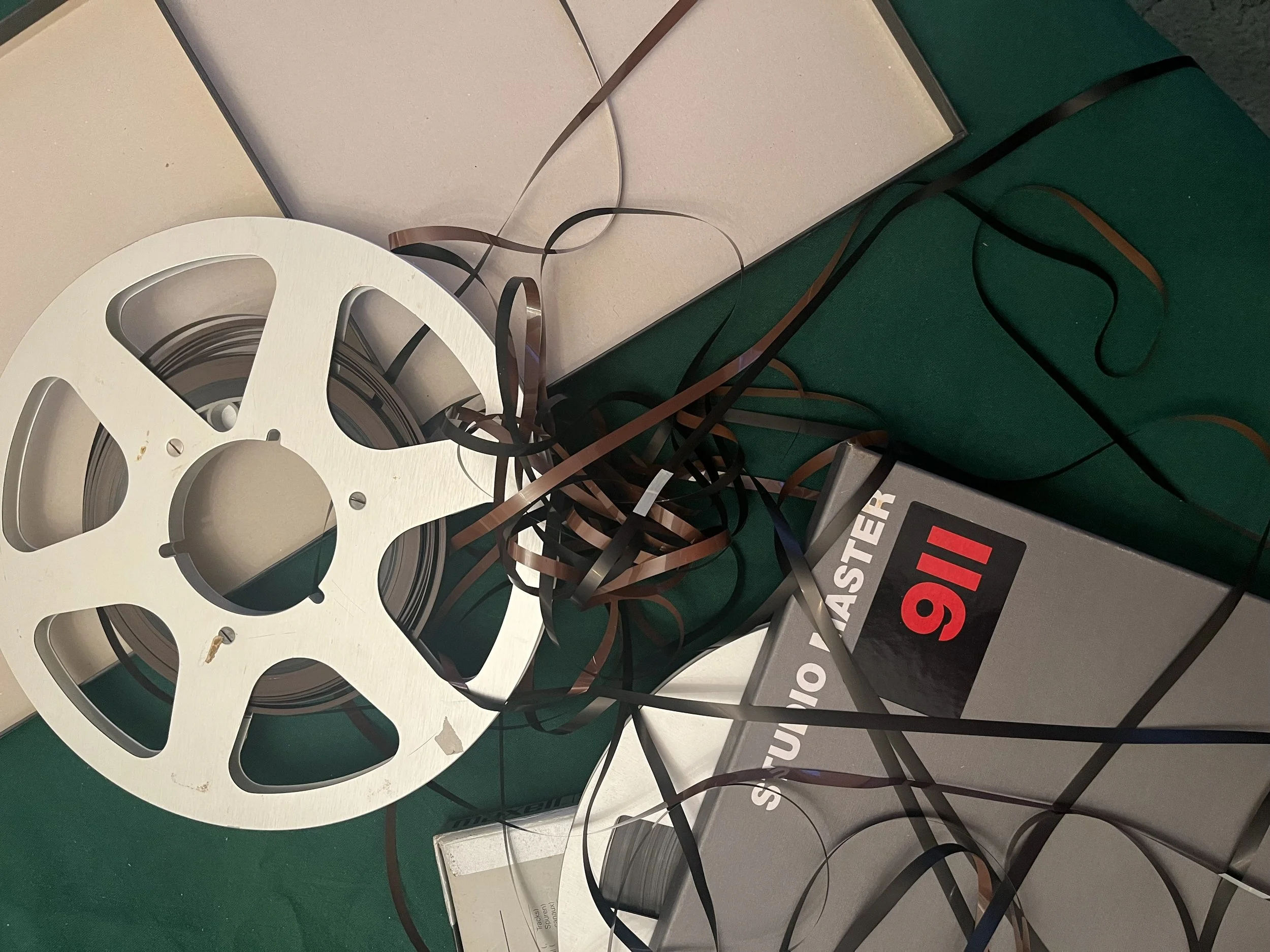
When I was given my first razor blade, roll of tape and chinagraph pencil, I knew I was going to love editing. It wasn’t that long ago, was it?
Nothing beat the delight of hearing a smooth, seamless edit. I remember how I’d listen to a magnificent yet flawed recording, locate the bit that needed some work, mark the in and out points with a yellow chinagraph pencil, put the tape on the block and get to work with the blade.
Less fun was the time spent scrabbling around on the floor hunting for the vital phrase — or conjunction — that had been cut out, safely stashed to one side, but had somehow (and inevitably) slipped to the floor and disappeared into a snaking pile of offcuts.
In my first career as a radio news journalist, the creative process was limited to short-form writing for the spoken word, clipping soundbites for news bulletins or making short illustrated packages. The right soundbite, a clever bit of writing, some quality sound effects and a tipperty-top tune — all delivered to a tight deadline — became my apprenticeship in the basics of sound design.
At this point I’d like to point out that this wasn’t the dark ages. There has been swift and seemingly endless technological change in the radio world over the last 30 years. Digital editing and DAWs brought a brand new universe of sound-based possibilities. There seemed to be hundreds of different systems — almost a new one every month — and when I went freelance, I learned a different set-up in almost every radio station.
We first started downloading podcasts in the UK 20 years ago, although it took the pandemic in 2020 for them to really take off. I was producer of WHSmith’s Richard and Judy Bookclub Podcast for nine years — scripting, overseeing the recording and editing. It was enormous fun creating ludicrous scenarios, and our hosts were always game for a laugh. I particularly liked the playful ones, like this episode with Jodi Picoult for her book The Storyteller.
An edit suite has shrunk from a room full of equipment to the size of a laptop — in fact, the size of an iPhone (I don’t do Android). So when the pandemic struck and travelling work suddenly became a little thin on the ground, I was still able to work from home. The excellent Bob Jones (aka thatRobJones) brought me on board as Sound Designer for what turned into a series of projects for China Plus.
Everyone’s heard the saying, “The journey of a thousand miles starts with a single step”, but I discovered there was rather more to Laozi’s Dao De Jing than that. Bob’s interpretations of its 81 chapters came in perfectly sized listens of less than 15 minutes.
Working with Bob is always enormous fun — and educational. His great scripts gave me the opportunity to create a distinct sound for longer-form, speech-based work. There were tales of the Monkey King, followed by journeys through the dynasties of ancient China. I learned a thing or two along the way: while “The West” was grubbing around in the Dark Ages, China’s Song Dynasty (960–1279) was powering ahead in technology, science, philosophy, mathematics and engineering. Gunpowder, compasses and printing presses were all coming into being.
The work grew from there — from the Monkey King to the Song and Tang dynasties, and eventually Chinese Folk Tales, where I even got to revive my frustrated inner actor while project managing a rather fabulous group of voiceover friends. Each series needed its own sound and gave me another excuse to disappear down a historical rabbit hole.
I’ve always loved working with sound, and there are still so many things I want to learn — from the dark arts of 3D sound and binaural recording to the world of cinema sound. I spend enough time at the movies when I’m not working; perhaps it’s time I found out what’s happening on the other side of the screen.